History / PI · JULY SOURCE UPDATES
The Roland T-8 Joins Raspberry Pi Compa
July brought T-8 recognition, USB audio capture, clock and pattern control, then playable bass from Push 2 and a step-sequencing workflow built around the messages the T-8 actually accepts.
The Roland T-8 joined the original Raspberry Pi Compa project on July 2, 2026. It brought drums and a bass voice into the setup, and it also made a useful design constraint very clear: a device page should show what the connected instrument can actually do.
The T-8 was not another P-6 with a different name. Its documented integration used notes, pattern changes and clock. Its sound-shaping controls stayed on the hardware.
Recognize the instrument, then respect its limits
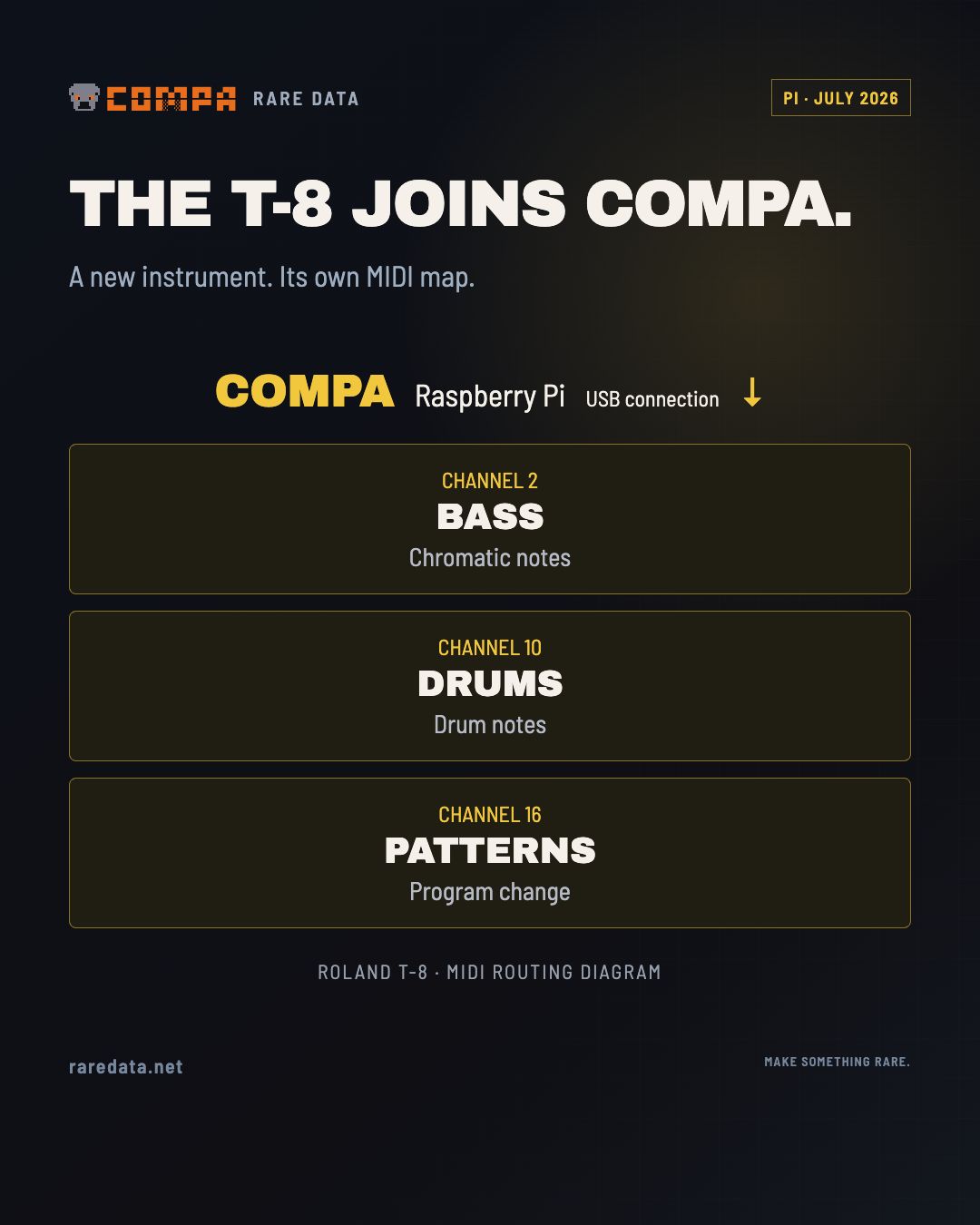
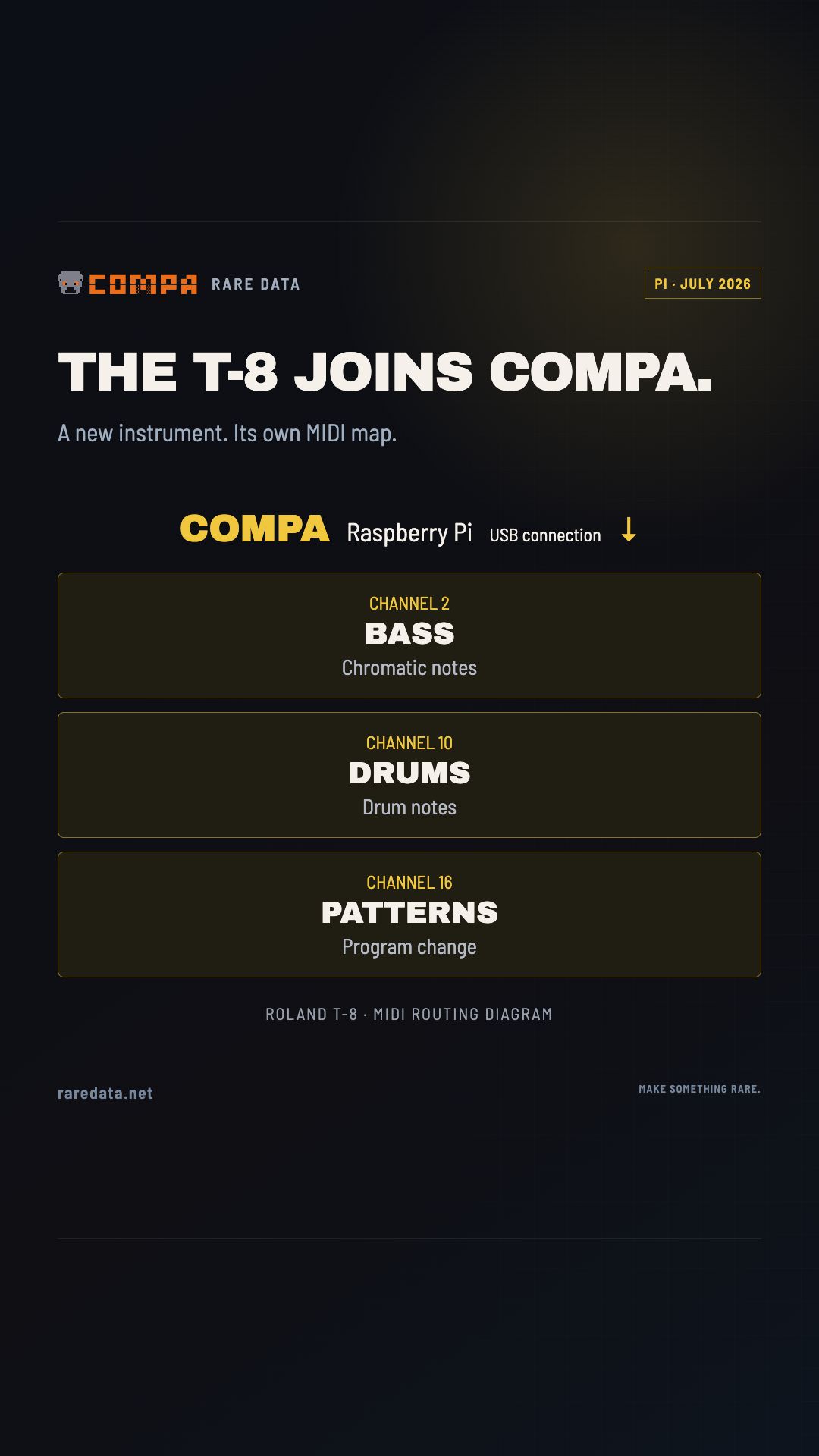
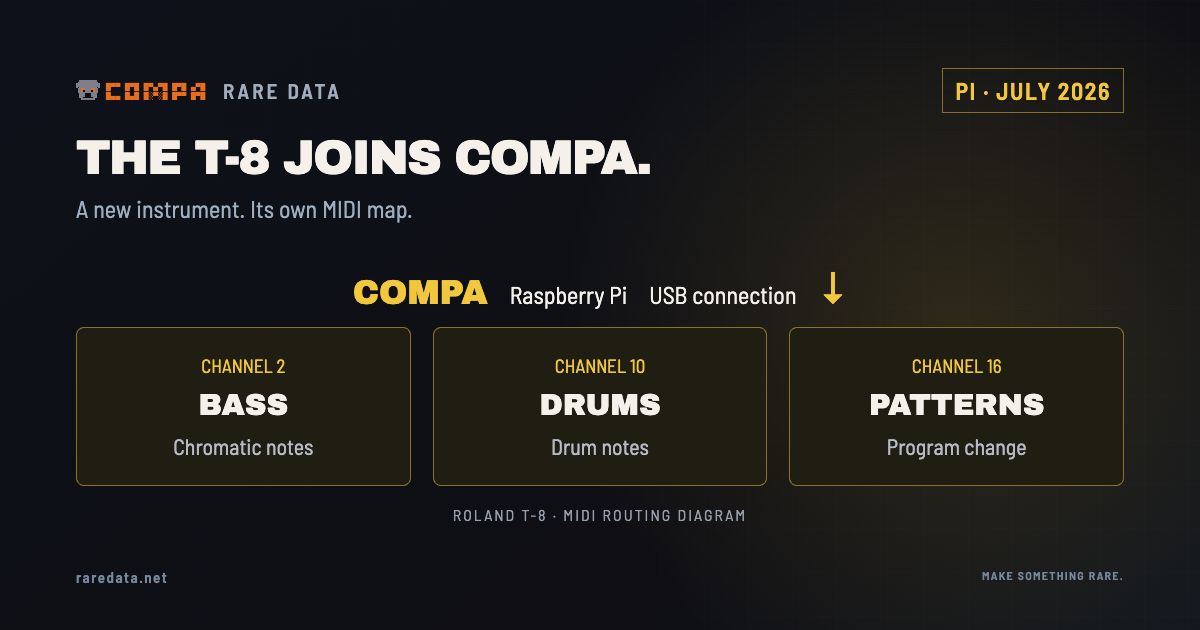
The first T-8 profile added recognition, USB audio capture, clock/transport and pattern selection. The routing map separated its parts:
- Channel 2: chromatic bass.
- Channel 10: drum notes.
- Channel 16: program changes for its 64 patterns.
The profile intentionally had no MIDI CC sound-shaping map. Compa therefore stopped offering the P-6-style parameter controls when the T-8 was selected. A cutoff knob on the screen would not be useful if the hardware could not receive that command.
The T-8 still connected to the Pi by USB. The project’s setup reference covers its USB sync and AIRA LINK settings; this was a hardware connection, not a cable-free claim.
July 2: play the bass from Push 2
The next change gave the T-8 workspace KEYS and PATTERN tabs. Keys sent notes to the bass voice, and Pattern selected the hardware’s patterns. Push 2 could become the playing surface for that bass while the Pi handled the routing.
A T-8-specific monophonic retrigger mode sent the previous note-off before the next note-on when a fresh envelope was wanted. That behavior was opt-in for this target, rather than changing how every connected sampler played.
July follow-ups: generation and a step grid
The following source updates added generated basslines and separate ARP/GEN control pages. The changelog’s July 5 entry documents a 16-step SEQ workspace for the T-8 and P-6, with pitch, octave, accent, slide and rest per step.
That sequencer played notes from the Pi into the instrument. It did not write a pattern into the T-8’s internal memory. Overlapping notes provided slides where the bass supported them; accent used velocity. Later changes let Push 2 remain a keyboard while the touchscreen showed the sequence, and added saving of user patterns.
The preset and generator work changed quickly during that week. The useful through-line was hands-on editing: keep a line, adjust a step, play over it, or save a pattern you made yourself.
Where this chapter lives
These are July source updates, after the latest tagged 0.3.2 Pi image. The June image alone should not be described as containing the later T-8 work. Consult the repository and its update/setup documentation for the exact source state you are using.
That history matters because the Pi project continued beyond its first SP-404 and P-6 announcement. Its lessons about device-specific behavior, capture and playing surfaces carried into the companion that later moved to iPhone and iPad.
Sources & useful links