Open source / PRE-ALPHA · 0.1.0a1
PyLinkAudio Brings Ableton Link Audio Into Python
A pre-alpha set of Python bindings for sending and receiving Link Audio on macOS and Linux.
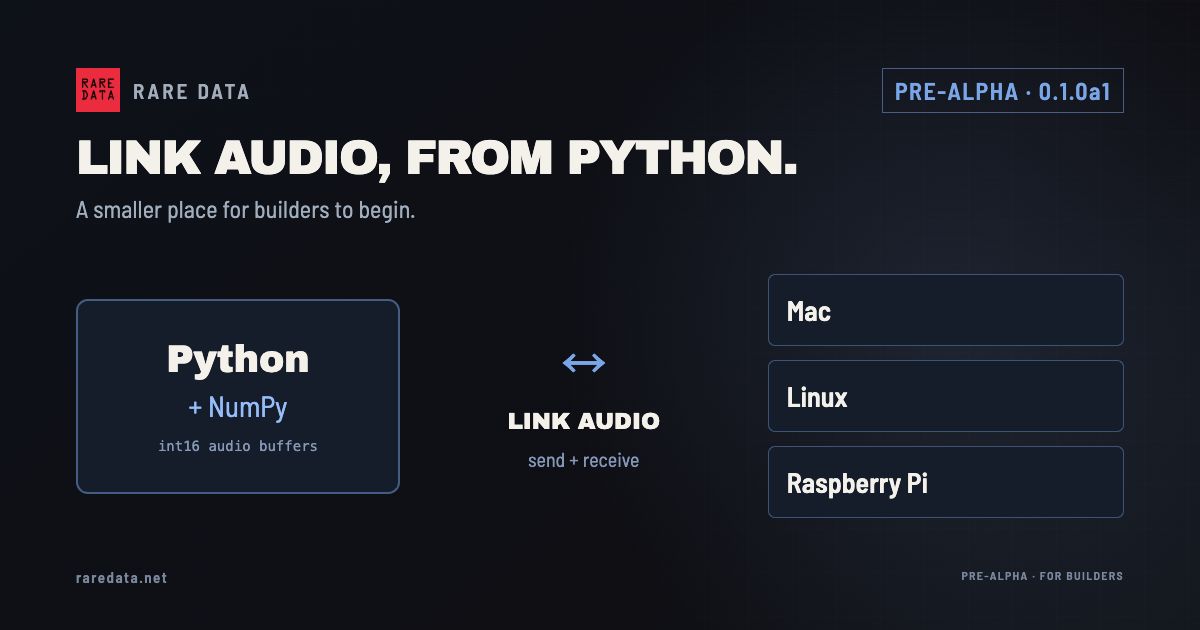
Part of the Link Audio work was finding a practical way to send and receive audio from Python, without building a large native application first.
That became PyLinkAudio: Python bindings for Ableton Link 4.0 with Link Audio send and receive support.
The first public build, 0.1.0a1, shipped May 3, 2026. The “a” matters. This is pre-alpha infrastructure for builders, not a polished end-user audio app.
What it exposes
PyLinkAudio lets Python code join a Link session and move multi-channel audio through Link Audio. The current bindings use NumPy int16 buffers and keep the real-time movement of samples off the normal Python control path with threaded, lock-free single-producer/single-consumer buffers.
The first release targets:
- Python 3.11 through 3.13;
- macOS on Apple silicon;
- Linux x86_64;
- Linux arm64, including Raspberry Pi-class systems.
Send and receive are both represented. The point is to make prototypes, bridges, research tools, and small utilities possible without writing an entire application in C++ first.
What it is not
There is no asyncio interface yet. It is not a DAW, a virtual audio driver, or a promise that Wi-Fi will behave like a cable.
For Raspberry Pi and other embedded setups, wired Ethernet is still the better default when timing and dropouts matter. Network conditions and receiver buffering remain part of the result.
The project is GPLv3, and this pre-alpha was built against the documented Link-4.0.0b4 interface. Compatibility needs to be checked as the upstream SDK changes.
Why publish it
The most useful part of an experiment is often the piece somebody else can build on.
PyLinkAudio belongs to a larger Rare Data thread: the original Raspberry Pi Compa, Link Audio experiments, and Force Link Audio. Publishing that layer makes the work inspectable and gives other builders a smaller place to begin.
Sources & useful links