History
Bringing the SP-404 MKII and P-6 into Ableton Link with Raspberry Pi
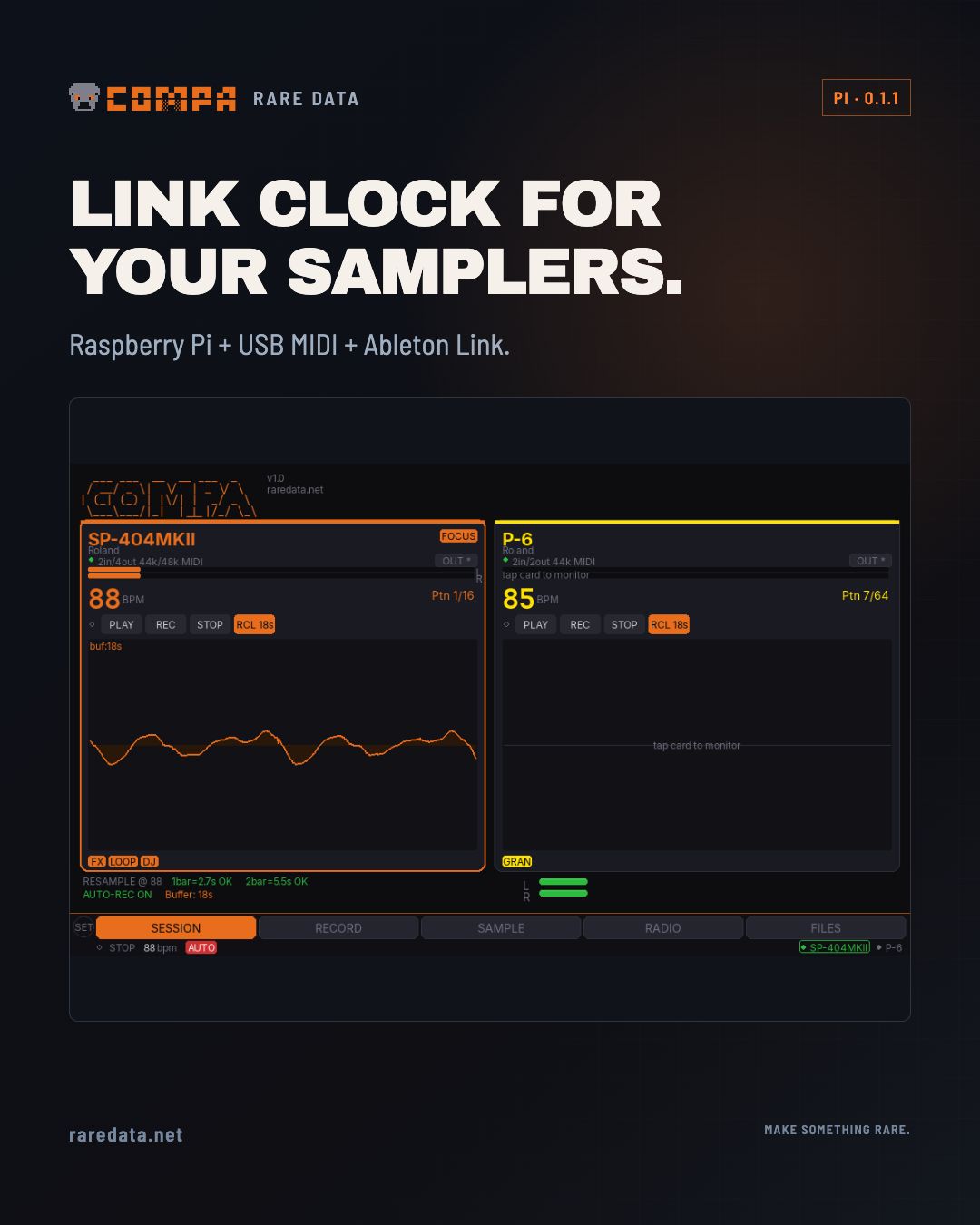
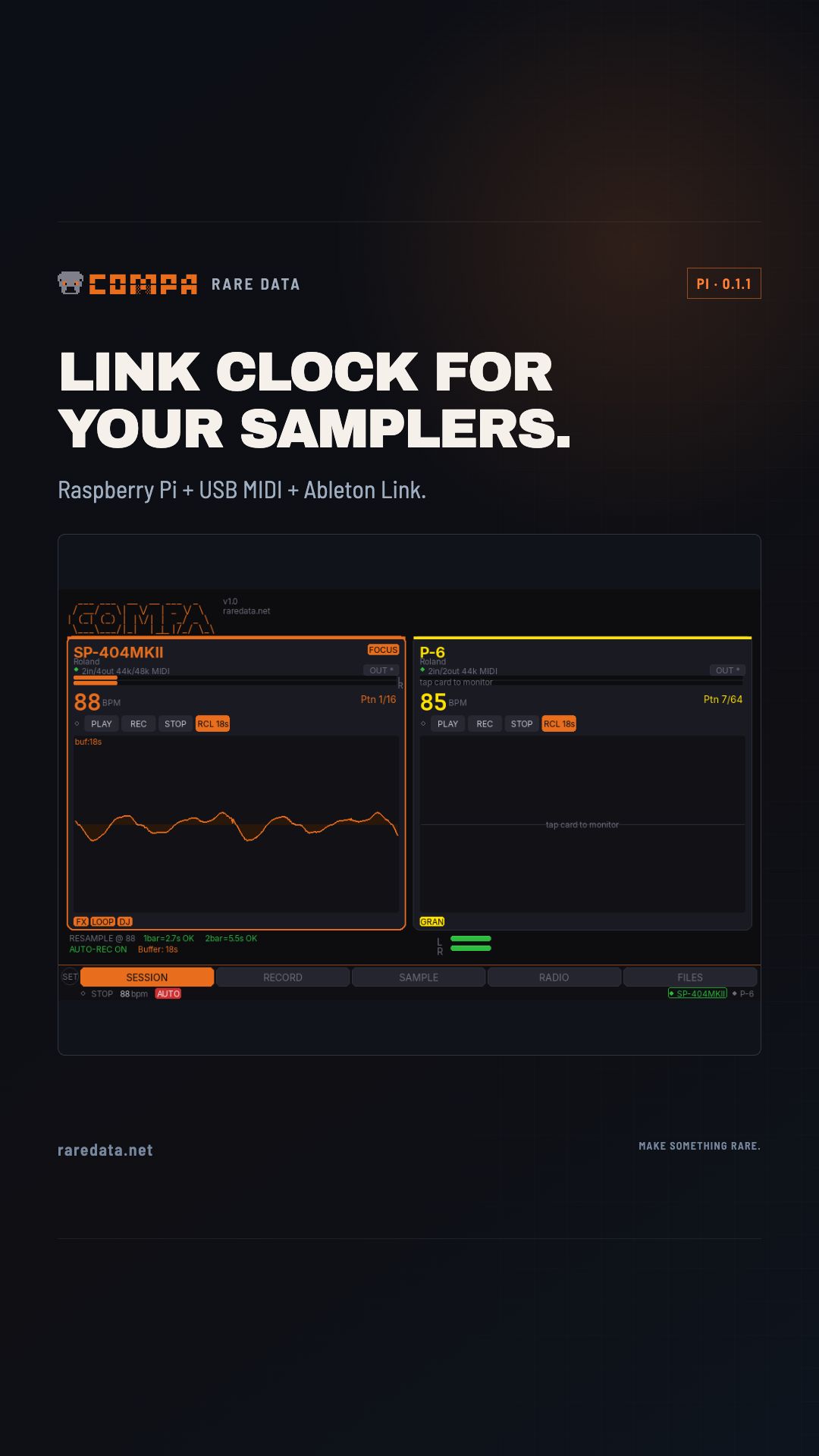
Compa 0.1.1 gave the Raspberry Pi a Link-clock bridge for the SP-404 MKII and P-6: join the network session, then send MIDI clock to the connected hardware over USB.
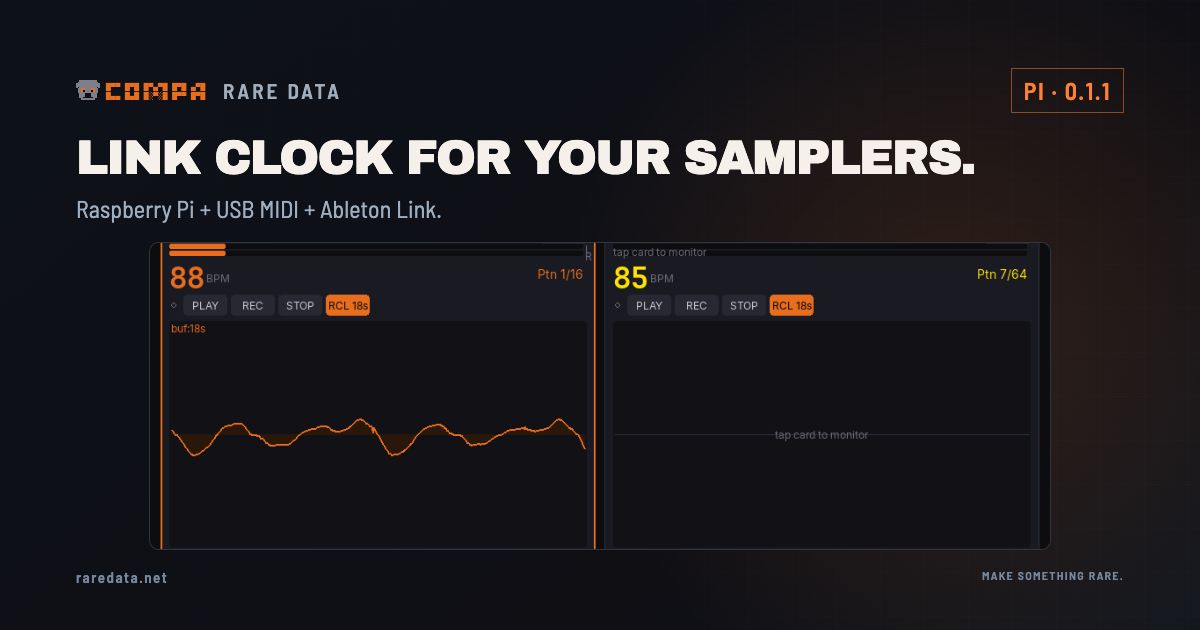
The SP-404 MKII and P-6 can follow MIDI clock, but they do not join an Ableton Link session on their own. Raspberry Pi Compa connects those two sides: Link tempo on the network, MIDI clock to the hardware over USB.
Version 0.1.1, released May 2, 2026, added that bridge to the touchscreen companion I was building beside the samplers.
What connects to what
The connection is straightforward:
Link-capable peer ↔ local network ↔ Raspberry Pi Compa → USB MIDI clock → SP-404 MKII or P-6.
Each sampler still needs its USB connection to the Pi. Ableton Live or another compatible Link peer joins the same local network. A phone or tablet can participate if that is part of your setup, but neither is required for the idea to make sense.
Compa follows the shared Link tempo and sends MIDI clock to the connected device. The receiving sampler must be set to accept the appropriate external or USB sync source. Link timing and MIDI clock do not carry the sampler’s audio; audio routing is a separate part of the setup.
A visible bridge beside the gear
The new Ableton Link settings made the connection visible: an Enable Link switch, a Send MIDI Clock switch, the current tempo source, and the list of connected clock recipients. The Session screen gained a Link activity indicator.
More than one Compa on the local network could join the same Link session. That let separate hardware setups share a tempo reference while each Pi maintained the USB connections to its own devices. Actual timing still depends on the network, clock routing and receiving hardware.
The point was to keep playing the SP or P-6 while a small companion handled the translation between the protocols they already used.
What followed the first Link release
The project continued after 0.1.1:
- May 3: Link Audio send work entered the source, using PyLinkAudio.
- May 10: version 0.2.0 expanded recall recording and the SP-404 mode controls.
- May 14: version 0.3.0 added per-controller Network MIDI bypass and recorder improvements.
- July 2: the Roland T-8 gained its own device profile and playable bass/pattern workflow, followed by generation and step-sequencing updates.
Those are different parts of the story, with different jobs. Read the recall, Link Audio and Network MIDI chapter, then follow the T-8 work.
View the original Raspberry Pi project · Read its changelog · Explore today’s COMPA for iPhone and iPad